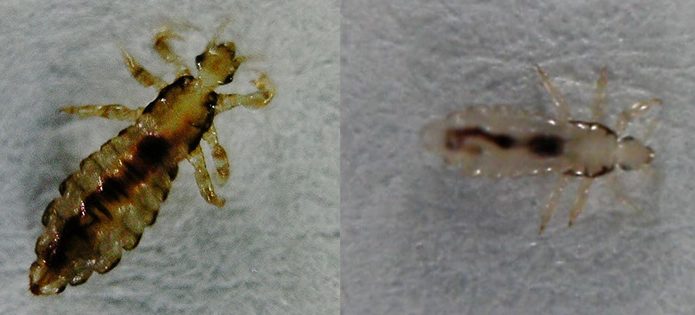
Where to Look for Lice and Nits
Lice and nits are not spread evenly throughout the hair. They concentrate in warm areas close to the scalp. When checking for lice, focus on these three spots first:
Behind the Ears
One of the most common spots. The warm skin behind each ear is a preferred location for both lice and nits.
Nape of the Neck
The hairline at the back of the neck is another hotspot. Check the first inch of hair from the scalp carefully.
Crown of the Head
The top and part line of the head. Part the hair in multiple places and look at the scalp directly under good lighting.
Nits vs. Dandruff — How to Tell the Difference
The most common mistake people make is confusing nits with dandruff or dry scalp. Here’s how to tell them apart:
✓ Nits
- Firmly attached to the hair shaft — will not flake off when touched
- Teardrop or oval shaped
- Usually found within 1 inch of the scalp
- Brown when alive, transparent/white after hatching
✗ Dandruff / Dry Scalp
- Flakes off easily when touched or brushed
- Irregular shape, flaky texture
- Found anywhere on the scalp and hair
- White or grey
- Moves freely when you touch the hair
Quick test: Try to slide the speck down the hair shaft with your fingernail. If it moves easily — dandruff. If it’s stuck and requires effort to remove — it’s likely a nit.
Identifying Head Lice in Different Hair Types
Lice look and behave differently depending on hair color and texture. Here’s what to look for in each hair type.
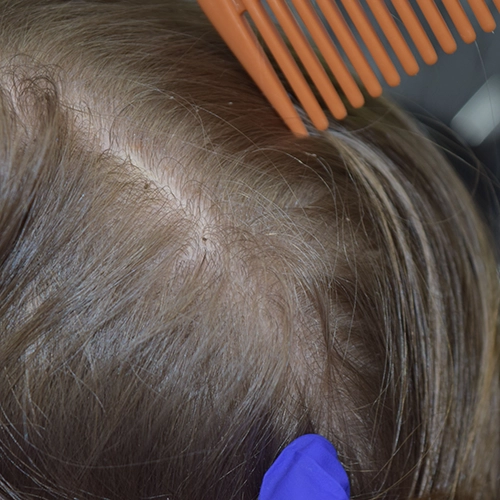
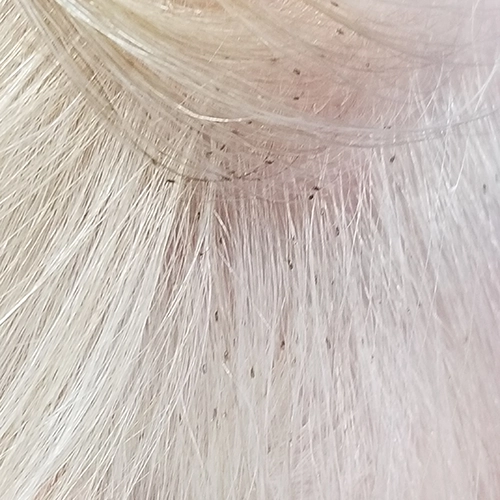
Blonde Hair
Nits in blonde hair are particularly hard to spot. After the nit hatches, the empty shell becomes transparent or whitish — blending in almost perfectly with light hair. Live nits are slightly yellowish which can help distinguish them.
The lice themselves are actually easier to see in blonde hair because their brown bodies contrast against the light strands.
What to look for: Small, oval specks attached to individual hairs near the scalp. They will not brush off easily.
Dark Brown Hair
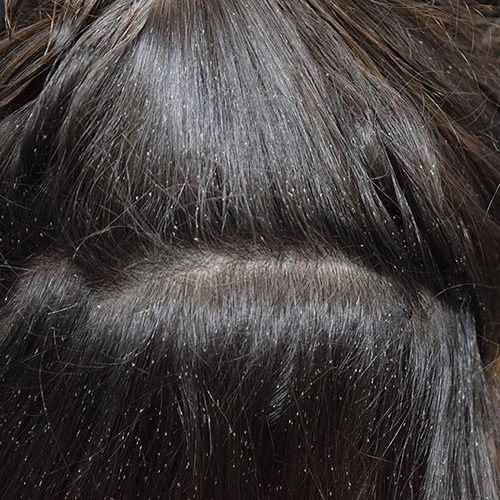
Brown hair presents the opposite challenge. Nits are easier to spot because their whitish color contrasts against the darker hair. However, the lice themselves blend in with brown hair, making them harder to catch in motion.
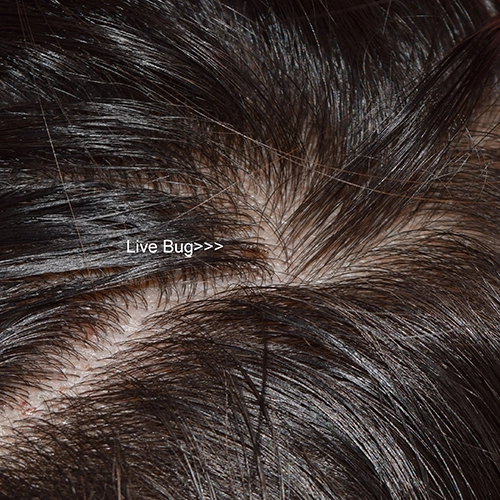
Look closely at the scalp in bright light. Lice move fast — part the hair quickly and look before they scatter.
What to look for: White or off-white oval specks glued to individual hairs within an inch of the scalp. Moving brown specks on the scalp are live lice.
Brown Curly Hair
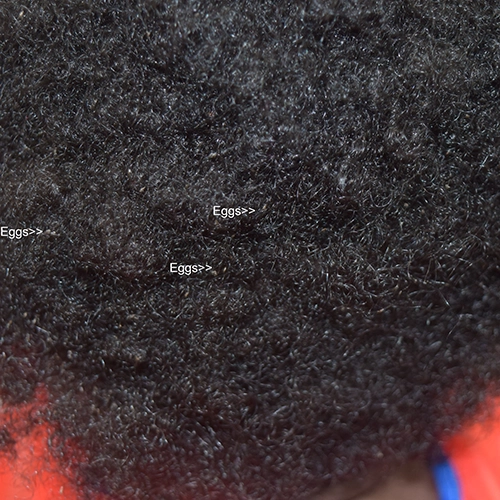
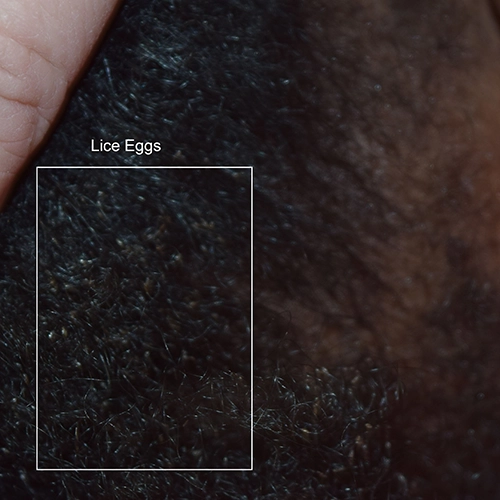
Curly hair is the most challenging for detection. The curls create natural hiding spots where nits can be tucked out of sight, and lice can move between strands more easily.
The best approach is to work in small sections, straightening each section slightly as you go, and use a fine-toothed comb under bright light. Don’t rush this — it’s easy to miss an infestation in curly hair.
What to look for: Small white or yellowish specks attached to individual curls, usually within an inch of where the hair meets the scalp.
Not Sure if It’s Lice?
Let Us Take a Look — Head Checks Are Quick
If you’re not sure what you’re seeing, call us. We do head checks and can tell you in minutes whether it’s lice, nits, or something else entirely. Same-day appointments may be available.